Rosetta – Interactive computing at your fingertips

Tired of SSH-ing into HPC clusters or group workstations, setting up tunnels, and fighting X11 just to launch a Jupyter Notebook or a remote desktop?

Rosetta brings interactive computing to you and your research community — securely, reproducibly, anywhere. Turn any SSH-accessible computing resource into a user-friendly science platform for modern data analysis!

Managed or self-hosted, open-source, and designed for real research infrastructures.
Features
Built for modern, interactive science

Rosetta turns your existing SSH-accessible machines and clusters into a container-centric science platform — without rebuilding your infrastructure.

Modern & reproducible

Rosetta runs every task inside standard OCI containers, ensuring your software stack is consistent, portable, and reproducible across any system. Bring your own Docker, Podman, or Apptainer image — Rosetta handles the rest.

Docker Podman Singularity Apptainer

Seamless integration

Connect Rosetta to any SSH-accessible machine or cluster and start running interactive environments instantly. No new identity provider, no Kubernetes, no reconfiguration of your existing HPC setup — just use your current accounts and ACLs.

SSH Linux clusters SLURM & schedulers

Secure by design

Every task runs in an isolated, access-controlled container, with per-session credentials and fully SSL-encrypted paths. Rosetta’s architecture follows security best practices informed by real-world operations experience.

Container isolation Per-session auth Principle of least privilege

Open source

Rosetta is fully open-source under Apache 2.0, actively developed in the open. Use it freely, contribute, customize it, or deploy it institution-wide — it’s yours to build on.

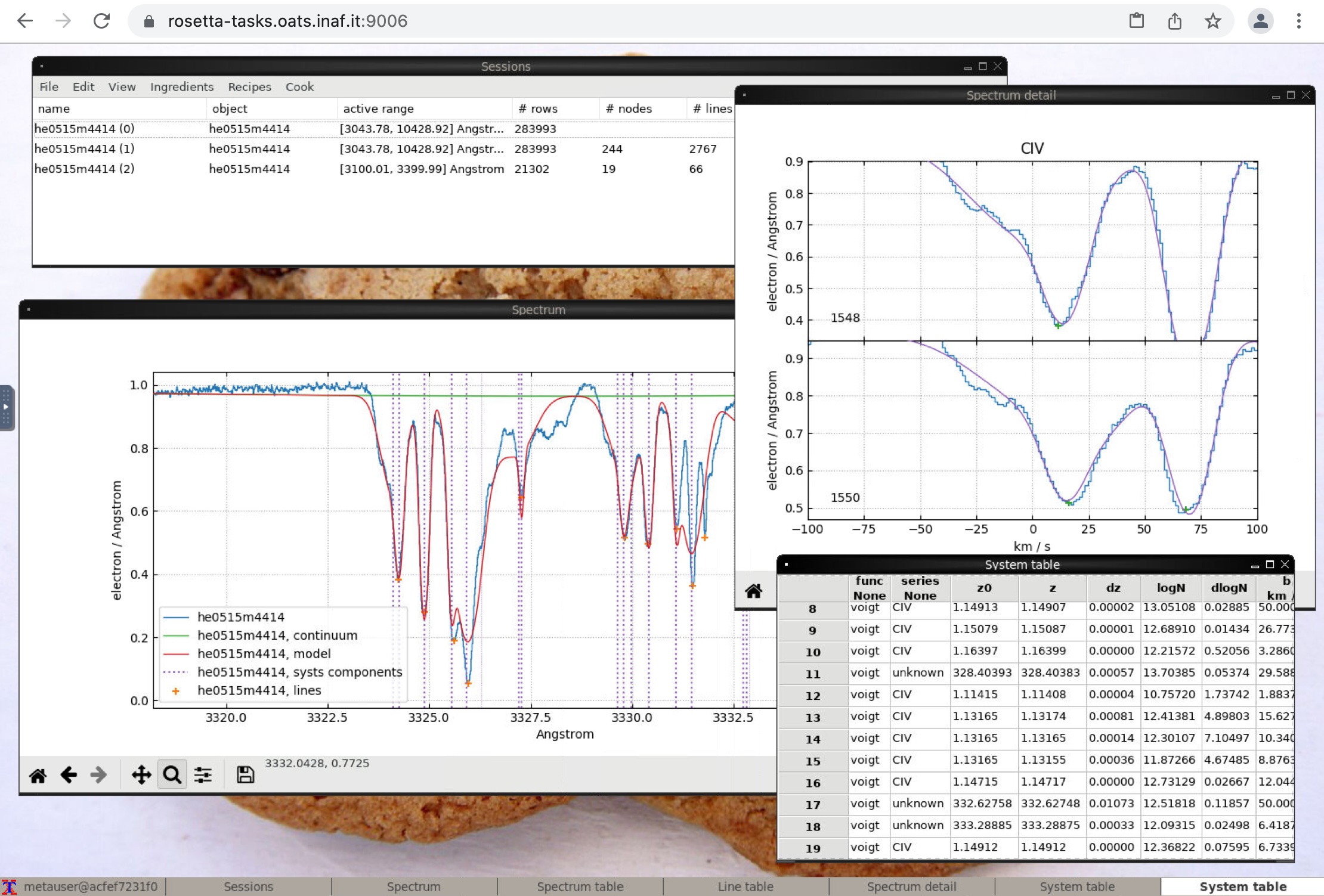
Rosetta can automatically set up interactive analysis environments (such as remote desktops and Jupyter Notebooks) on HPC cluster nodes by using software containers, thus allowing us to interactively access the cluster nodes and efficiently manage the dependencies of our pipelines.
L. Bruno et al., The Planck clusters in the LOFAR sky [paper]
How it works
From SSH host to science platform

Rosetta sits on top of your existing infrastructure and gives users a simple web entry point for powerful, interactive computing — without changing how your cluster works.

1 Connect a resource

Register any SSH-accessible machine or cluster node — workstation, lab server, HPC login node, or cloud VM.

2 Launch interactive tasks

Choose a container image: Jupyter-based, remote desktops, GUI applications, or custom ones. Rosetta schedules it and exposes a secure URL to your browser.

3 Share with your community

Grant access to collaborators, students, or your whole institution using existing accounts and ACLs. Rosetta becomes a unified, user-friendly portal to your compute resources.

Why Rosetta?
Built by and for researchers
  • No more tunnels, X11 forwarding, or SSH gymnastics.
  • Run anything from Jupyter Notebooks to full remote desktops and domain-specific GUIs.
  • Container-based environments make your work reproducible and shareable.
  • Works with your existing HPC cluster and access controls, not against them.
  • Managed or self-hosted, open-source, and free from vendor lock-in or black-box SaaS.
  • Designed around the messy reality of real research computing, not just idealized diagrams.

Start using Rosetta

Experience interactive computing without the pain of tunnels, X11, and hand-crafted environments. Try Rosetta live or deploy it on your own infrastructure and give your community a platform they will actually enjoy using.

Open-source. Secure. Flexible. Built for science.